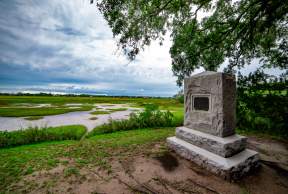
The Bloody Marsh Battle Site stands as one of the most significant historical landmarks on Georgia’s coast, marking a decisive moment in the struggle for control of the southeastern colonies during the 18th century. Located on St. Simons Island, this historic site commemorates the Battle of Bloody Marsh, a pivotal encounter that helped secure British control over Georgia and halted Spanish expansion into the region. Today, the site serves as a reminder of the fierce conflicts that shaped early American history and the strategic importance of Georgia’s coastal defenses.
The Historical Background
In the early 1700s, Georgia was the southernmost of the British colonies in North America, positioned directly between British South Carolina and Spanish Florida. This made the region a strategic frontier in the ongoing rivalry between Great Britain and Spain. The founder of Georgia, James Oglethorpe, understood the importance of defending the colony against Spanish forces that sought to reclaim territory and weaken British influence along the Atlantic coast. Tensions escalated in 1742 during the War of Jenkins’ Ear, a conflict between Britain and Spain that spread from the Caribbean to the southeastern coast of North America. Spanish forces launched an invasion of St. Simons Island, aiming to capture British fortifications and push northward into Georgia and South Carolina.
The Battle of Bloody Marsh
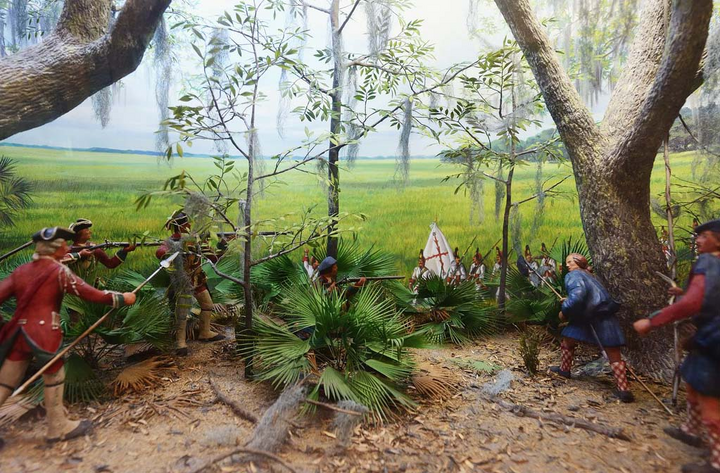
The Battle of Bloody Marsh took place on July 7, 1742, following the earlier Battle of Gully Hole Creek. Spanish troops advanced across St. Simons Island in an attempt to locate British positions. However, Oglethorpe and his forces, composed of British soldiers, Scottish Highlanders, and Native American allies, set up a strategic ambush in a marshy area. As Spanish soldiers moved through the marsh, British forces launched a surprise attack. The sudden assault caused confusion and heavy casualties among the Spanish troops, forcing them to retreat. According to historical accounts, the marsh became stained with blood from fallen soldiers, giving the site its name, “Bloody Marsh.” This battle proved to be the final major land engagement of the Spanish invasion of Georgia. The Spanish ultimately withdrew from St. Simons Island, abandoning their efforts to take control of the colony.
The Role of James Oglethorpe
James Oglethorpe played a crucial role in organizing the defense of Georgia. His leadership and strategic planning were key to the British victory at Bloody Marsh. Oglethorpe used deception, intelligence, and well-positioned defenses to create the illusion of a larger British force, discouraging further Spanish attacks. His success at Bloody Marsh and nearby engagements secured Georgia’s future as a British colony and strengthened the defensive line against Spanish Florida for decades.
The Bloody Marsh Battle Site Today
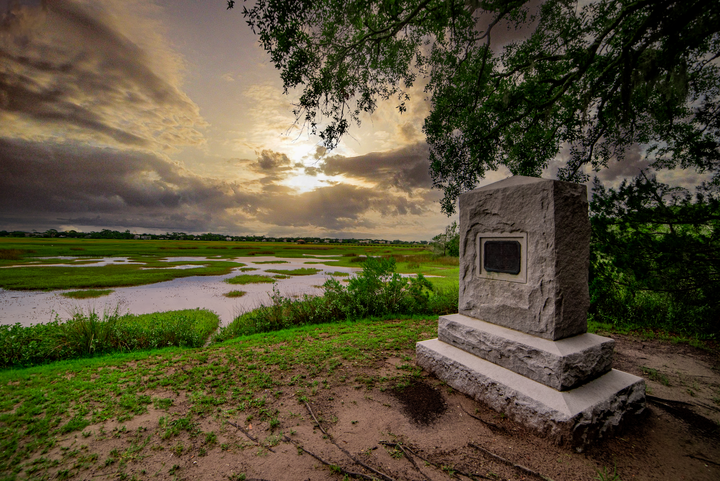
Today, the Bloody Marsh Battle Site is preserved as part of the Fort Frederica National Monument on St. Simons Island. Visitors can walk along interpretive trails, view historical markers, and explore the marshland where the battle took place. The site offers educational exhibits that explain the events of 1742 and the broader colonial conflict between Britain and Spain. The peaceful landscape contrasts sharply with the violent history that once unfolded there, allowing visitors to reflect on the sacrifices made during the colonial era and the importance of preserving historical landmarks.
Historical Significance
The Battle of Bloody Marsh holds lasting significance in American history for several reasons:
- Ended Spain’s attempts to invade Georgia.
- Secured British dominance along the southeastern coast.
- Protected the future development of the Georgia colony.
- Demonstrated the importance of strategic military leadership and alliances.
Without this victory, Georgia’s colonial future might have been dramatically different, potentially altering the political and cultural development of the southeastern United States.
The Bloody Marsh Battle Site is more than just a historic location; it is a symbol of resilience, strategy, and the struggle for control in colonial America. The events of July 7, 1742, shaped the destiny of Georgia and reinforced British power in the region. Today, the site serves as an educational and cultural landmark, preserving the memory of a battle that helped define the future of the American Southeast. By visiting and learning about the Bloody Marsh Battle Site, we gain a deeper understanding of the conflicts and decisions that shaped early American history and the foundations of modern Georgia.
Address: 11806 Old Demere Road, St. Simons Island, Georgia 31522
Exploring the Horton House Ruins
If you ever find yourself wandering around Horton House Ruins Historic Site, you might feel like you’ve stepped back…
Bloody Marsh Battle Site History
The Bloody Marsh Battle Site stands as one of the most significant historical landmarks on Georgia’s coast, marking a…
Jekyll Island: Mosaic Museum Guide
If you are planning a visit to Jekyll Island, one place that deserves your time is the Mosaic, Jekyll Island Museum. This…
Guide to Christ Church: History & Visitor Information
One of the most peaceful and historically significant places to visit in the Golden Isles is Christ Church. Surrounded by…